

ALIGHT Sustainable Aviation Toolbox: Practical Resources for Airport Decarbonisation
.
ALIGHT´s digital platform digital platform delivers 30+ tools across 11 topic areas, translating research into actionable guidance for zero-emission aviation
The aviation sector faces unprecedented pressure to decarbonise operations while maintaining safety, efficiency, and service quality. Airports serve as critical infrastructure hubs where multiple decarbonisation strategies converge, starting with Sustainable Aviation Fuel (SAF) integration, going all the way to ground support equipment electrification, renewable energy deployment, and emissions monitoring.
And still, translating sustainability goals into operational reality requires practical guidance when addressing specific implementation challenges. In this context, Airport operators need concrete tools for stakeholder engagement, feasibility assessment, technology selection, and regulatory compliance.
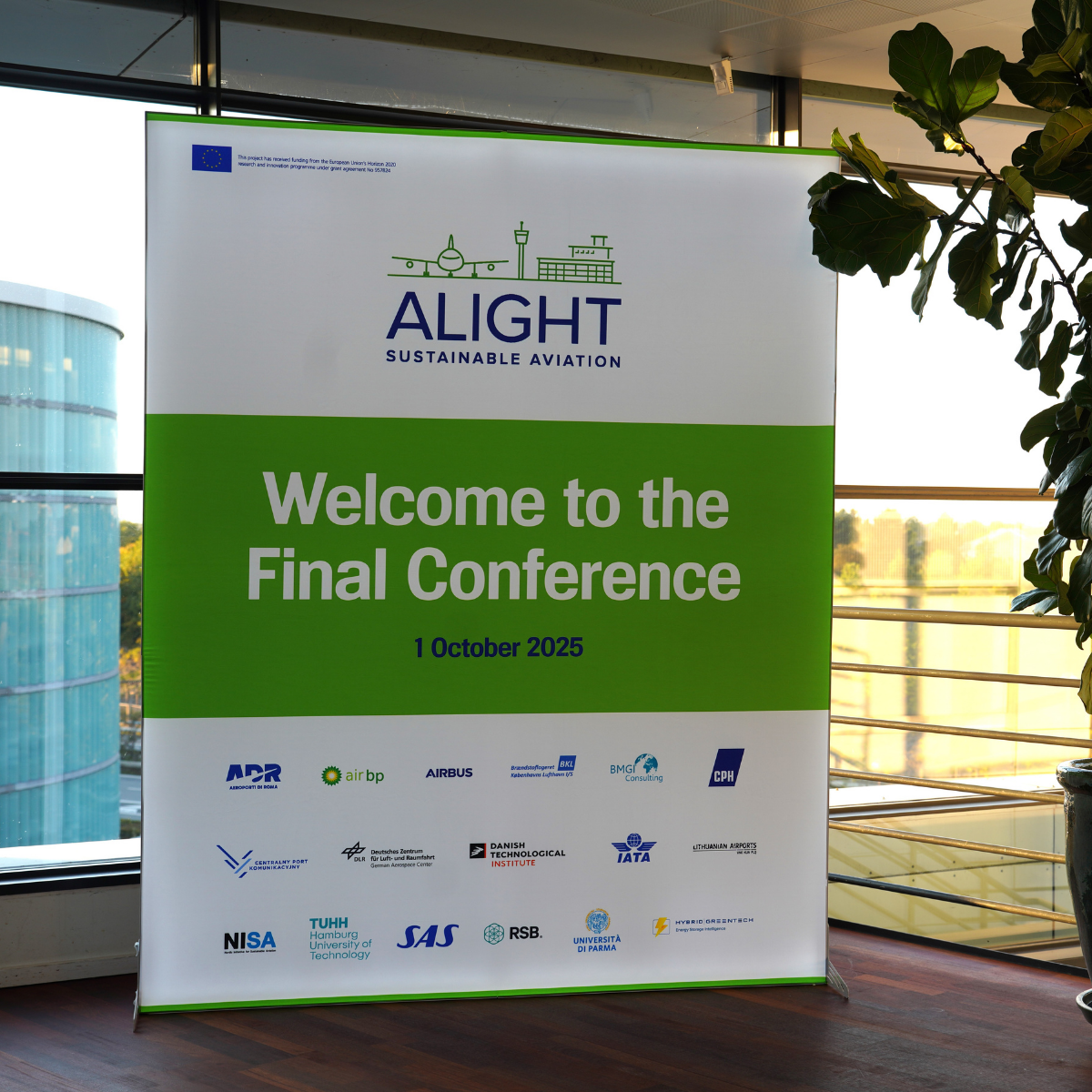
ALIGHT Sustainable Aviation Toolbox answers to this implementation gap by providing comprehensive digital resources developed through the EU Horizon 2020 ALIGHT project. The platform delivers over 30 practical tools across 11 critical topic areas, enabling airports to advance zero-emission aviation goals with evidence-based implementation strategies.
The toolbox is supported by the European Union within the framework of the Horizon 2020 programme and brought together 17 project partners including Copenhagen Airport (Lighthouse), Rome, Vilnius, and Warsaw airports.
Discover how the ALIGHT Sustainable Aviation Toolbox can help your airport move from strategy to implementation with ready-to-use, expert-developed tools.
.
RSB’s Research-Practice Integration
.
The toolbox exemplifies RSB’s approach to sustainable aviation development: combining technical expertise with practical implementation frameworks that address real operational challenges.
Through the ALIGHT project, RSB contributed sustainability assessment capabilities, SAF guidance and stakeholder engagement expertise. This work demonstrates how research partnerships deliver beyond academic outputs, they create resources that airport operators, policymakers and aviation stakeholders can immediately apply.
RSB’s role focused on ensuring Sustainable Aviation Fuel integration follows rigorous sustainability criteria, providing expert guidance throughout the project and developing tools supporting responsible SAF procurement and compliance.
The platform reflects RSB’s 18-year track record developing frameworks that bridge scientific rigour with practical applicability across aviation, energy, and infrastructure sectors.
.
Eleven Critical Topic Areas
.
1. Airport Buildings
Resources address energy performance and sustainability for airport infrastructure, including energy flexibility, renewables integration, and building management systems.
Tools include: Process guidance for energy management systems, stakeholder checklists, data collection protocols, model predictive control guidance, and EMS implementation guidelines.
2. Energy Management System
Resources supporting energy management system implementation and optimisation. Includes guidance on integrating renewables, enhancing energy flexibility, and coordinating stakeholder engagement.
Tools include: EMS implementation guidance, smart charging and V2G protocols, stakeholder checklists, and model predictive control frameworks.
3. Aircraft Stand
Innovative approaches to aircraft stand electrification and automation supporting next-generation aircraft operations. Addresses infrastructure requirements for electric aircraft and ground power systems.
Tools include: Electric demand estimation for future aircraft, stakeholder analysis frameworks, and conceptual design guidance.
4. Ground Support Equipment
Strategies for electrifying ground support equipment fleets and integrating Vehicle-to-Grid technology. Addresses equipment selection, charging infrastructure, and fleet management for sustainable operations.
Tools include: EV charging infrastructure guidance, smart charging and V2G protocols, V2G assessment tools, evaluation methods, and comprehensive GSE planning tools.
5. Solar Panels
Practical guidance on planning and implementing solar power at airports. Covers feasibility assessment, stakeholder engagement, installation logistics, and operational considerations for aviation environments.
Tools include: Process guidance for photovoltaic systems, stakeholder checklists, implementation guidelines, and transition sequencing for green mobility hubs.
6. Energy Storage
Guidance for introducing battery energy storage systems. Addresses project phases from feasibility through operation, technology selection, and integration with renewable energy and grid services.
Tools include: Process guidance for battery energy storage systems, smart charging integration, stakeholder checklists, V2G evaluation methods, and control frameworks.
7. Parking and Transportation
Resources supporting greener transport solutions for passengers and staff. Includes emissions analysis, best practices, and infrastructure planning for reducing ground transportation emissions.
Tools include: GHG emissions calculators, EV charging infrastructure guidance, smart charging protocols, V2G evaluation methods, and implementation guidelines.
8. SAF Supply Chain
Comprehensive Sustainable Aviation Fuel supply chain tools and implementation guidance. Covers procurement strategies, logistics planning, regulatory compliance, quality monitoring, and stakeholder collaboration.
Tools include: Airport SAF assessment tools, communication toolkits, readiness self-assessment checklists, fuel logistics best practice handbooks, and sustainability verification checklists.
RSB’s expertise in SAF certification and sustainability assessment directly informed these resources, ensuring tools reflect rigorous sustainability standards.
9. Local Air Quality
Methods and tools for monitoring and improving local air quality in airport environments. Includes emission tracking, mitigation strategies, and stakeholder communication.
Tools include: APU emissions control guidance, communication toolkits, GHG emissions calculators, GSE planning tools, and stakeholder analysis frameworks.
10. Greenhouse Effect
Guidance for addressing aviation-related greenhouse gas emissions. Focuses on reducing climate impact through operational improvements and strategic planning.
Tools include: Airport SAF assessment tools, communication toolkits, APU emissions control, fuel logistics best practices, and segregated SAF delivery guidelines addressing non-CO₂ effects.
11. SAF Compliance
Checklists and procedures supporting SAF compliance, responsible procurement, and transparent emissions reporting. Addresses regulatory requirements, certification protocols, and verification procedures.
Tools include: Airport SAF assessment tools, communication toolkits, APU emissions control, readiness self-assessment checklists, and sustainability verification checklists.
Want to learn more about RSB’s role in the ALIGHT project? Watch our short video featuring Blanca de Ulibarri to hear how RSB is advancing sustainable aviation through robust certification, stakeholder collaboration, and practical implementation tools.
.
.
.
.